
Makar Sankranti: A Colorful Journey Through India’s Traditions
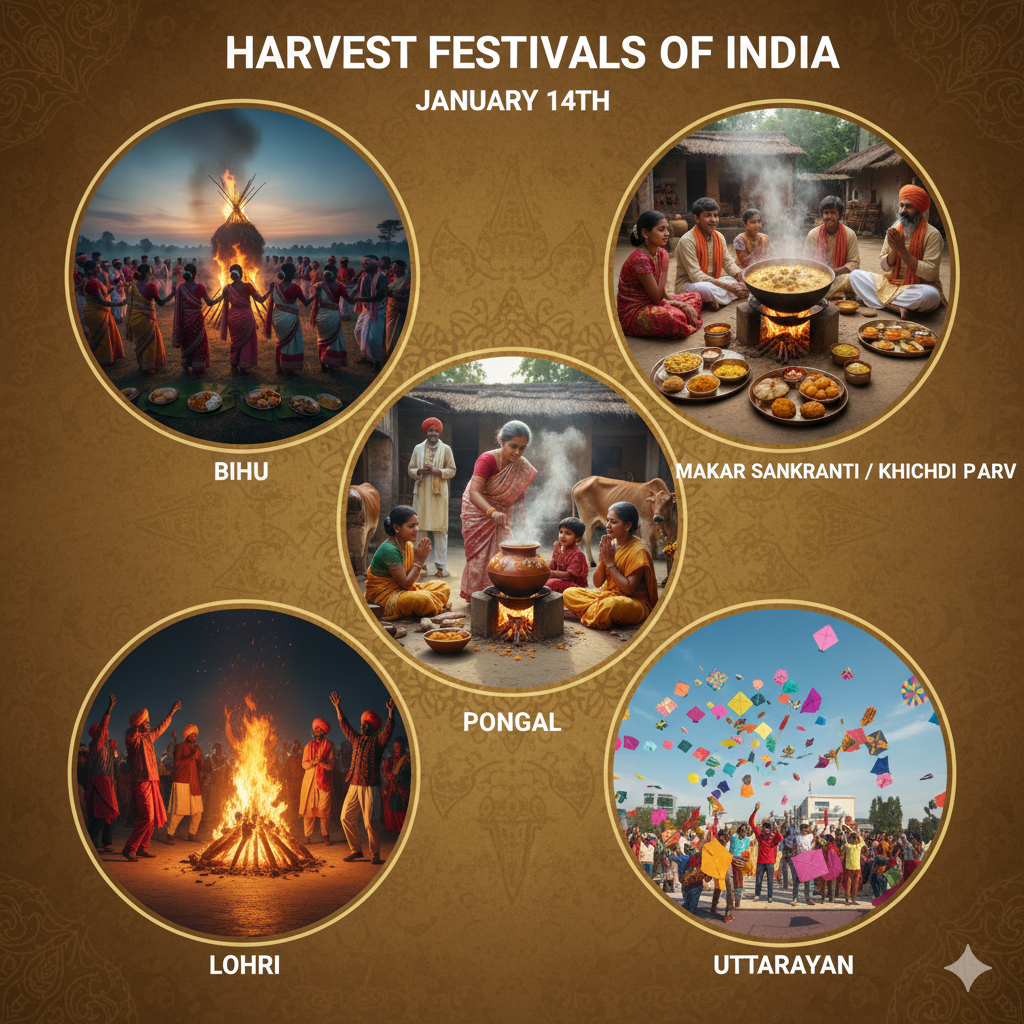
The 14th of January, for many, marks the beginning of a new season, the sun’s journey into the zodiac sign of Makara (Capricorn), and a profound cultural shift across India. Far from being a singular festival, Makar Sankranti (or simply Sankranti) is a vibrant tapestry of regional traditions, echoing the agricultural rhythms and spiritual beliefs of a diverse nation. It is a day when the chill of winter begins to recede, promising longer days and the bounty of the harvest. This article delves into how this auspicious day is celebrated in different states, highlighting the unique customs, culinary delights, and spiritual fervor that bind India in a joyous embrace.
The Astronomical and Agricultural Significance
Historically, Makar Sankranti is one of the few Hindu festivals celebrated according to the solar calendar, falling on the same date (with slight variations every few decades due to the precession of the equinoxes) each year. It signifies the end of the winter solstice and the beginning of the sun’s northward journey (Uttarayan). This shift is considered highly auspicious, marking a period of spiritual awakening and the commencement of longer, warmer days.
Agriculturally, it’s a harvest festival, celebrating the yield of winter crops. Farmers rejoice in their hard work, offering their first produce to deities and sharing their abundance. This dual significance—astronomical and agricultural—forms the bedrock of its widespread observance.
Maharashtra: Tilgul Ghya, God God Bola! (Eat Sesame & Jaggery, Speak Sweet Words!)
In Maharashtra, Makar Sankranti is a three-day affair, with the main celebrations on January 14th. The iconic greeting, “Tilgul ghya, goḍ goḍ bolā!” (Take tilgul, speak sweet words!), encapsulates the spirit of the festival. Tilgul are sweet treats made from sesame seeds (til) and jaggery (gul), symbolizing friendship, harmony, and the sweetness of relationships. The gifting of tilgul ladoos (balls) or chikkis is central to the celebrations.
Women participate in Haldi-Kunku ceremonies, where they invite friends and relatives, apply turmeric (haldi) and vermillion (kunku) on each other’s foreheads, and exchange small gifts, often traditional utensils or items representing good fortune. Children fly kites, and families prepare traditional Maharashtrian dishes like Puran Poli (sweet flatbread stuffed with lentil and jaggery filling) and various sesame-based sweets. The spirit of forgetting past grievances and fostering goodwill is paramount.
Gujarat: A Sky Ablaze with Uttarayan
Gujarat transforms into a breathtaking spectacle on January 14th, known as Uttarayan. This state’s celebration is synonymous with kite flying. The skies are literally painted with thousands upon thousands of colorful kites, and the air buzzes with friendly competition. People gather on rooftops, armed with their kites and spools of manjha (thread coated with glass powder), trying to cut down their rivals’ kites. The shouts of “Kai Po Che!” (I’ve cut it!) reverberate through cities like Ahmedabad and Surat.
Families and friends celebrate with special festive food, including Undhiyu (a mixed vegetable casserole, traditionally cooked upside down in earthen pots) and Jalebi (sweet, deep-fried pretzels). The energy is palpable, a unique blend of spiritual observance, communal gathering, and vibrant outdoor sport. The night before, bonfires are lit, signifying the burning of old worries and welcoming new beginnings.
Punjab: The Roaring Bonfires of Lohri
In Punjab, and by extension parts of Haryana and Himachal Pradesh, Makar Sankranti is preceded by Lohri on January 13th. Lohri is a magnificent celebration of harvest and fertility, particularly significant for newlyweds and newborn babies. Giant bonfires are lit, around which families and communities gather, singing traditional folk songs and dancing to the beat of the dhol.
Offerings of popcorn, peanuts, rewari (sesame and jaggery brittle), and gajak are thrown into the fire, symbolizing gratitude to the fire deity and seeking blessings for abundance. Lohri marks the peak of winter and heralds the longer days. On January 14th, the celebrations continue with kite flying, feasting on sarson da saag (mustard greens curry) with makki di roti (cornbread), and sweet dishes like til chikki.
Tamil Nadu: The Four-Day Extravaganza of Pongal
In Tamil Nadu, Makar Sankranti is celebrated as Pongal, a glorious four-day harvest festival. Each day has its unique significance:
- Bhogi Pongal (Day 1): Similar to Lohri, old and unwanted articles are discarded and burnt in a bonfire, symbolizing new beginnings and the cleansing of the past. Homes are cleaned and decorated.
- Surya Pongal (Day 2): This is the main day, dedicated to the Sun God (Surya). Families prepare Sweet Pongal (a dish of rice, lentils, jaggery, and ghee) in new earthen pots, allowing it to boil over, symbolizing abundance and prosperity. The overflowing pot is a sign of good fortune. Offerings are made to Surya, including sugarcane, coconuts, and other fresh produce.
- Mattu Pongal (Day 3): Dedicated to cattle, particularly cows and bulls, which are essential to agriculture. Cattle are bathed, adorned with bells, flowers, and painted horns, and worshipped. Jallikattu, the controversial but deeply traditional bull-taming sport, is also associated with this day in certain regions.
- Kaanum Pongal (Day 4): A day for family reunions, picnics, and social gatherings. People visit relatives and exchange greetings, solidifying community bonds.
The aroma of freshly cooked Pongal, the vibrant kolams (rangoli) adorning doorsteps, and the collective spirit of gratitude permeate the air during this festival.
Uttar Pradesh & Bihar: Khichdi Parv and the Ganga Snan
In Uttar Pradesh and Bihar, the festival is widely known as Khichdi Parv or Makar Sankranti. Taking a holy dip (Ganga Snan) in sacred rivers like the Ganga, Yamuna, or Saryu is a central ritual. Pilgrims flock to places like Prayagraj (Allahabad) for the Magh Mela, a month-long spiritual fair that begins on this day.
The consumption of Khichdi (a dish of rice and lentils) is paramount, often distributed as prasad (holy offering). Sesame-based sweets like tilkut, til patti, and ladoos are also widely prepared and consumed. The donation of blankets, food, and other necessities to the poor and needy is considered highly auspicious, reflecting the spirit of charity and selfless service. Kite flying is also a popular activity, especially in cities.
West Bengal: Poush Sankranti and Pitha Utsav
In West Bengal, the festival is called Poush Sankranti, named after the Bengali month of Poush. It is primarily a harvest festival, celebrating the new rice crop. The highlight is the making and eating of a variety of traditional Bengali sweets called Pitha or Pithe. These rice-flour-based delicacies come in numerous forms—steamed, fried, baked, filled with coconut, jaggery, or sweetened lentils.
Families gather to prepare these elaborate sweets, often a multi-generational activity. A holy dip in the Ganga is also considered sacred, particularly at Gangasagar, where the Ganga meets the Bay of Bengal, attracting millions of pilgrims. The day is marked by feasting, cultural programs, and expressions of gratitude for the harvest.
Assam: Bhogali Bihu / Magh Bihu
In Assam, Makar Sankranti is celebrated as Bhogali Bihu or Magh Bihu, signifying the end of the harvesting season. It’s a festival of feasting and merry-making. The night before, known as Uruka, is celebrated with community feasts. Makeshift huts called Mejis or Bhelaghars are constructed from bamboo, leaves, and straw, where people cook and eat together.
Early next morning, the Mejis are ceremonially burnt, symbolizing the burning of past negativities and seeking blessings. Traditional Assamese games like buffalo fighting and tekeli bhonga (pot breaking) are organized. Pithas, larus (ladoos made of coconut and sesame), and jolpan (traditional Assamese breakfast items like rice flakes, puffed rice, curd, and jaggery) are central to the culinary celebrations.
Rajasthan: The Spirit of Giving
In Rajasthan, Makar Sankranti is observed with great fervor, focusing on charity and traditional sweets. Women perform rituals and pray for the well-being of their families. The tradition of Sankranti daan (charitable giving) is very strong, with donations of clothes, food, and money made to the less fortunate.
A special sweet dish called Tilpatti (sesame brittle) is a festive favorite, along with other sesame-based preparations. Kite flying is also popular, adding a vibrant touch to the celebrations. The colorful attire and traditional folk music and dances contribute to the festive atmosphere.
Kerala: Makara Vilakku at Sabarimala
In Kerala, Makar Sankranti coincides with the Makara Vilakku festival at the Sabarimala Ayyappan Temple. This is a highly significant pilgrimage season, culminating in the sighting of the Makara Jyothi (a celestial star or light) and the divine “Makara Vilakku” (a fire/light that appears thrice on the Ponnambalamedu hill). Lakhs of devotees undertake a rigorous pilgrimage to witness this auspicious event. While the core celebrations are distinct, the astronomical timing aligns with Makar Sankranti.
Other States: A Glimpse
- Odisha: Celebrated as Makar Chaula, with offerings of uncooked, newly harvested rice, coconut, jaggery, banana, and sesame to the deities.
- Karnataka: Known as Suggi Habba, where young girls exchange sugarcane, sesame seeds, coconut, and jaggery with friends and family, wishing each other “Ellu bella tindu olle maathadi” (Eat sesame and jaggery and speak only good words). Cattle are also decorated and worshipped.
- Andhra Pradesh and Telangana: Celebrated as Pedda Panduga (Big Festival), a four-day affair similar to Pongal, with distinct local customs and culinary traditions like Ariselu (sweet fried pancakes) and Bobbatlu (sweet flatbreads).
Conclusion
Makar Sankranti on January 14th is more than just a date on the calendar; it is a unifying force that showcases India’s incredible cultural diversity. From the kite-filled skies of Gujarat to the sacred dips in the Ganga, from the bonfire dances of Punjab to the sweet Pithas of Bengal, and the overflowing Pongal pots of Tamil Nadu, the essence remains the same: a celebration of gratitude for the harvest, the transition of seasons, spiritual renewal, and the strengthening of community bonds. It is a testament to India’s ability to weave together myriad traditions into a single, vibrant thread of shared heritage, proving that despite differences in names and rituals, the spirit of joy and reverence connects all.