
The Divine Aesthetic: The Art, Symbolism, and Tradition of Krishna’s Dress
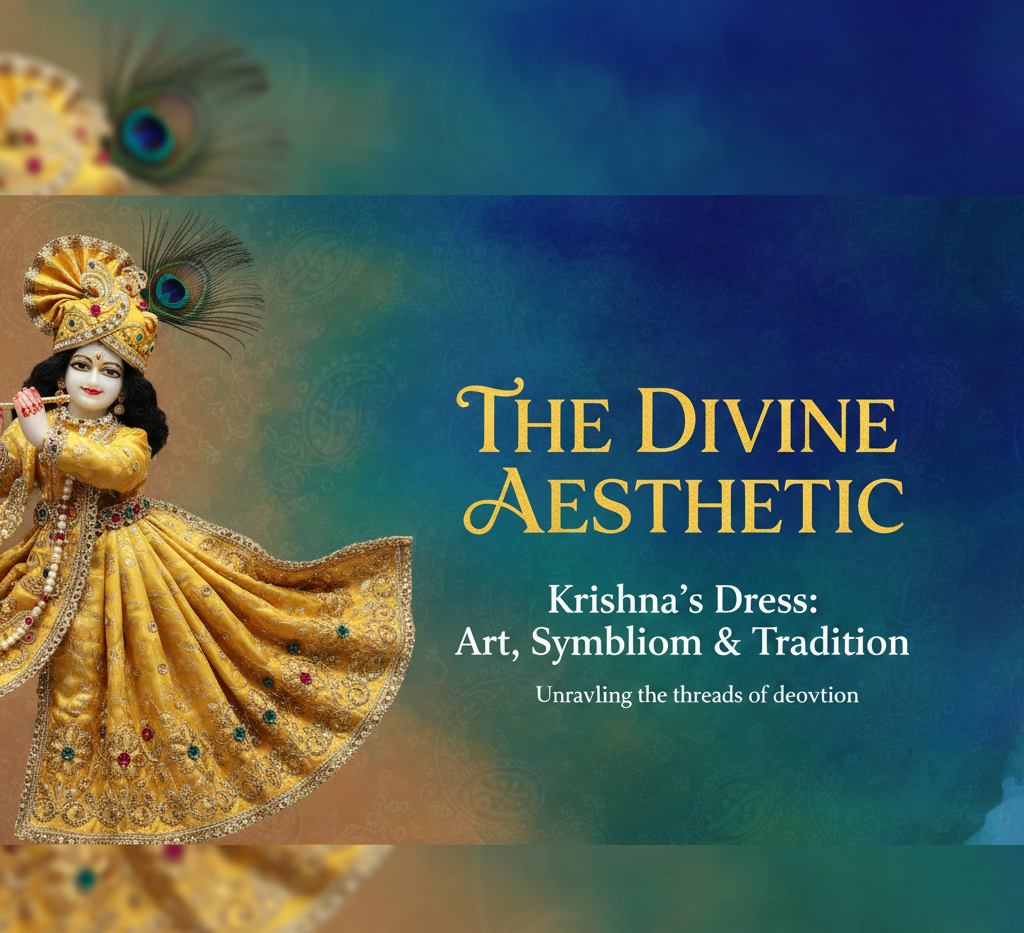
The image of Lord Krishna is perhaps one of the most recognizable and beloved icons in global spirituality. Whether depicted as the mischievous butter-thief Makhan Chor, the enchanting flute player Muralidhar, or the majestic King of Dwarka, Krishna’s attire is never merely a matter of clothing. It is a profound language of color, symbolism, and devotion.
In Indian culture, dressing a deity (known as Shringar) is considered an act of high devotion (Bhakti). The way Krishna is dressed reflects his moods, the seasons, and the specific theological narratives he represents.
1. The Core Elements of Krishna’s Attire
While Krishna’s wardrobe varies across different regions of India—from the elaborate silks of Mathura to the tribal-influenced weaves of Odisha—certain elements remain foundational.
The Pitambara (The Yellow Silk)
The most iconic feature of Krishna’s dress is the Pitambara, a dhoti made of brilliant yellow silk. In Vedic symbolism, yellow represents the sun, knowledge, and the purity of the soul. The contrast of the golden-yellow fabric against Krishna’s “Meghashyam” (dark as a rain cloud) skin is a central theme in devotional poetry.
The Peacock Feather (Mayur Pankh)
No representation of Krishna is complete without the peacock feather tucked into his crown. It symbolizes several things:
- Victory over Ego: The “eye” of the feather represents the all-seeing eye of the divine.
- Purity: Legends say the peacock is a bird of celibacy and grace, reflecting Krishna’s own transcendental nature.
- Natural Beauty: It signifies his deep connection to the forests of Vrindavan and the animals he protected.
The Vaijayanti Mala
Krishna is often seen wearing a long garland made of five types of forest flowers or “beads of victory.” This garland symbolizes the five elements of nature (Earth, Water, Fire, Air, and Ether), showing that the Lord of the Universe is adorned by nature itself.
2. Seasonal Shringar: Dressing for the Divine Calendar
In major temples like the Banke Bihari in Vrindavan or the Jagannath Temple in Puri, Krishna’s dress changes according to the weather and the lunar calendar.
| Season | Fabric & Style | Significance |
| Summer | Lightweight Muslin and Malmal | To keep the deity cool; often accompanied by sandalwood paste. |
| Monsoon | Dark greens and vibrant blues | Matching the lushness of the rainy season. |
| Winter | Heavy Velvet and Brocade | Rich, layered fabrics and warm shawls to protect from the cold. |
| Spring | Floral prints and Basanti (Yellow) | Celebrating the rebirth of nature during Holi. |
3. The Art of Making Krishna Dresses
Creating a “Poshak” (the complete outfit) for Krishna is a specialized craft passed down through generations.
- Selection of Fabric: High-quality silk, satin, and organza are preferred.5
- Embroidery (Zardosi): Many outfits feature intricate gold and silver thread work, often embedded with semi-precious stones or tiny mirrors.
- The Cutting (The Patka): The Patka is the ornamental sash that hangs from the waist. It requires precise tailoring to ensure it drapes beautifully during “Darshan.”
- Accessories: This includes the Mukut (crown), Baju Bandh (armlets), and Kangan (bangles).
4. Dressing Children as Krishna: A Living Tradition
In Indian households, especially during the festival of Janmashtami, dressing infants and toddlers as “Bal Krishna” is a cherished tradition. It is more than a costume; it is an expression of parental love (Vatsalya Bhava), treating the child as a manifestation of the divine.
How to Style a “Little Krishna”:
- The Dhoti: A pre-stitched yellow dhoti is easiest for kids.7
- The Flute (Bansuri): A small bamboo or plastic flute decorated with glitter.
- The Makeup: A small “Tilak” on the forehead and a “Kajal” (black eyeliner) dot on the cheek to ward off the “evil eye.”
- The Hair: A top-knot tied with a peacock feather.
5. Regional Variations in Krishna’s Dress
Across India, the “look” of Krishna adapts to local aesthetics:
- Shrinathji (Nathdwara): Here, Krishna is dressed in large, rectangular fabric panels called Pichwai, which act as both clothing and backdrop, depicting scenes from his life.
- Jagannath (Odisha): The attire is made of traditional Suta (cotton) and Khandua silk, featuring ancient Ikat patterns.
- Guruvayur (Kerala): Krishna is often adorned in simple, elegant white Mundu with gold borders, reflecting the minimalist aesthetic of the South.
6. The Spiritual Significance of Shringar
Why do devotees spend hours choosing the perfect dress for a deity? In the path of Bhakti Yoga, the physical beauty of the Lord is a tool for meditation. By focusing on the intricate details of his dress—the shine of the silk, the curve of the crown—the devotee’s mind becomes absorbed in the divine, leading to a state of inner peace and joy.
“The clothes do not cover the Lord; they reveal his various leelas (divine plays) to the eyes of the seeker.”
Frequently Asked Questions (FAQ)
What color is Krishna’s skin?
Krishna is traditionally described as Shyama, the color of a dark monsoon cloud or a deep sapphire blue. This represents his infinite, all-pervading nature, much like the sky or the ocean.
Why does Krishna wear a peacock feather?
Apart from its beauty, the peacock feather symbolizes that Krishna is the master of all arts and that he carries the essence of the entire cosmos (the “eye” in the feather) with ease.
What is the best fabric for a Krishna idol’s dress?
For home altars, Silk and Cotton are best. Silk is considered “Shuddha” (pure) for rituals, while cotton is breathable and comfortable for the deity during daily use.
Can I dress my Krishna idol in different colors?
Yes! While yellow is traditional, Krishna is often dressed in colors that correspond to the days of the week or specific festivals.For example, white is often used on Full Moon (Purnima) nights.
What are the essential accessories for a Krishna Shringar?
The four essentials are the Mukut (crown), the Bansuri (flute), the Vaijayanti Mala (garland), and the Kangan (bracelets).